

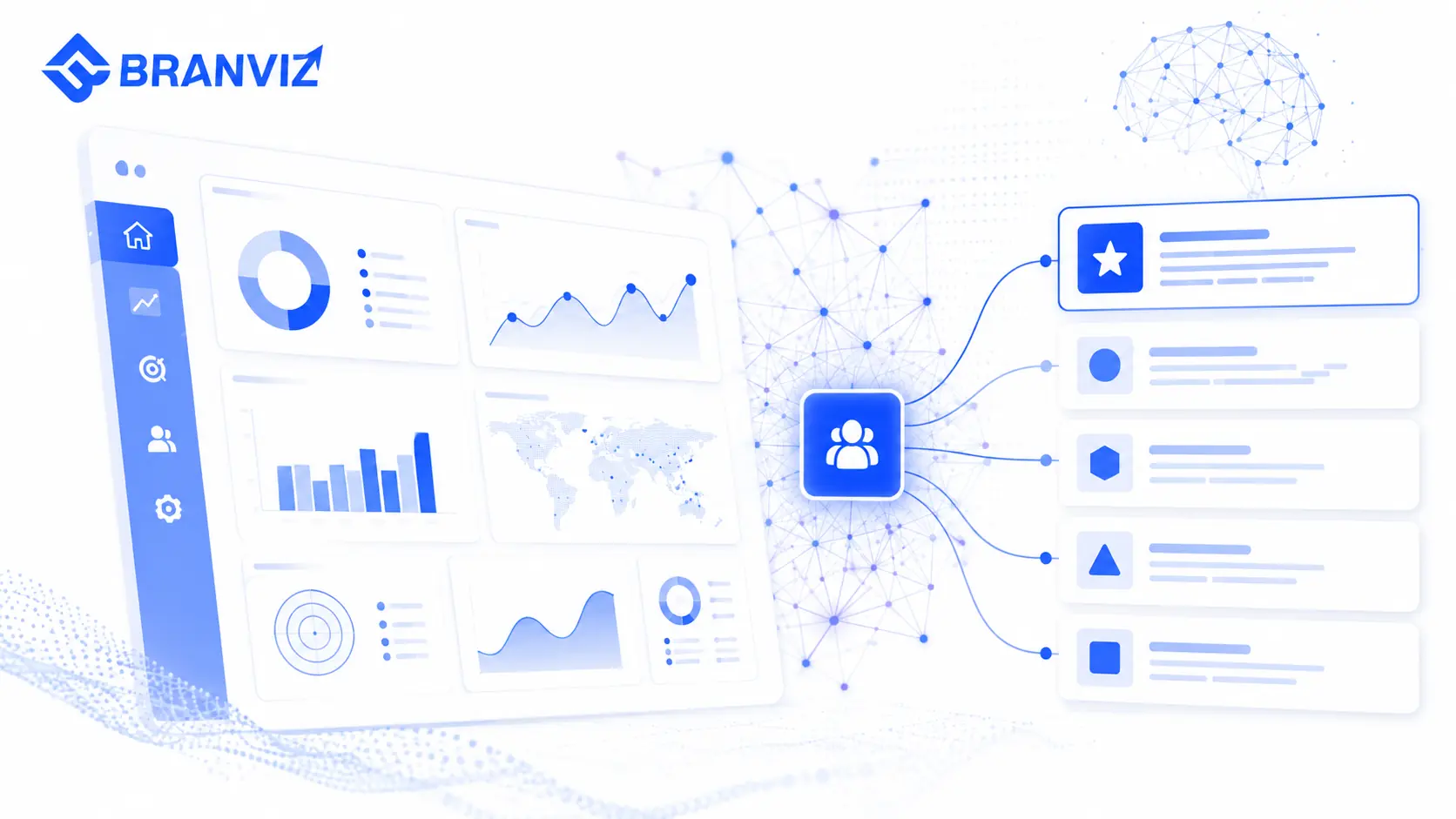
Branviz is an LLM Brand Visibility Tool built to show you exactly how AI models talk about your brand. Search isn’t just happening on Google anymore. People are asking ChatGPT, Gemini, Perplexity, and Claude for recommendations, and those AI models are quietly becoming the new gatekeepers of discovery. If your brand isn’t showing up in those answers, you’re losing customers before they ever land on your website.
Traditional SEO platforms weren’t designed for this. They’re great at tracking backlinks and keyword positions, but they weren’t built to answer the question that actually matters now: is ChatGPT recommending you or your competitor? That’s the gap Branviz was built to close.
Below, we’ve broken down five tools worth looking at, starting with the one purpose built for this exact problem.
1. Branviz — LLM Brand Visibility & AI Search Tracking
Branviz is built from the ground up for AI search, not adapted from an old SEO playbook. Instead of guessing how your brand appears in AI answers, it gives you hard data across every stage of the buyer journey. Here are the eight features that make it stand out.
1. LLM Mention Rate This is the number everything else builds on. Branviz tracks exactly how often the major AI models actively recommend your brand when someone asks a high-intent question in your category. If ChatGPT or Gemini isn’t naming you, you need to know that before your competitors take the spot permanently.
2. Full-Funnel Visibility Buyers don’t ask one type of question. Some are just exploring, others are ready to purchase. Branviz measures your visibility across the entire funnel, from broad educational prompts all the way to specific, ready-to-buy questions, so you know exactly where you’re winning and where you’re invisible.
3. GEO Web Readiness This one is genuinely useful and something most tools skip entirely. Branviz runs a technical audit of your website to see how ready it is for AI crawlers, checking the ten signals that models actually use to decide whether your content gets pulled into their answers. It’s the closest thing to a technical SEO audit built specifically for the AI era.
4. Average AI Position Getting mentioned is one thing. Getting mentioned first is another. Just like traditional rankings, position matters in AI generated answers, and Branviz tracks exactly where your brand lands in the AI’s curated list of recommendations.
5. User Sentiment Score It’s not enough to just be mentioned. Branviz breaks down the exact ratio of positive, neutral, and negative sentiment tied to your brand, showing you how the algorithm actually interprets public opinion about you. This is early warning data most brands never see until it’s already hurting them.
6. AI Share of Voice (SOV) This feature answers the bigger picture question: how much of the AI recommendation market do you actually own compared to your direct competitors? It’s a straightforward way to see if you’re leading your category or getting quietly pushed aside.
7. Multi-Model Coverage Branviz doesn’t limit tracking to a single AI platform. It monitors your brand across the different major models people are actually using, so you get a complete picture instead of a partial one based on whichever tool happened to be convenient to test.
8. Actionable Reporting Data alone doesn’t move the needle. Branviz turns everything it collects into clear, practical reports that show you what to fix and where to focus, so your team can actually act on the insights instead of just staring at numbers.
Together, these features make Branviz one of the few platforms genuinely built around the reality of how people search today. If you’re serious about tracking and improving your AI search presence, it’s worth starting here.
2. Polyvalent AI Visibility Tool
Polyvalent takes a broader approach, covering visibility tracking across a mix of AI platforms and traditional search at once. It works well for teams that want a single dashboard view rather than a dedicated deep dive into AI mentions specifically. It’s a solid option if you’re still testing the waters on AI search tracking.
3. Semrush
Semrush remains one of the most recognized names in SEO, and it has started rolling out some AI visibility features alongside its core toolkit. It’s strong for traditional keyword research and site audits, but its AI tracking capabilities are still catching up to tools built specifically for this space.
4. Ahrefs
Ahrefs is best known for its backlink database and keyword research tools, and it’s still one of the most reliable platforms for classic SEO work. If you’re looking for dedicated AI brand mention tracking though, it’s not really where Ahrefs shines yet.
5. Ubersuggest
Ubersuggest is a budget friendly option that’s popular with smaller teams and solo marketers doing basic keyword and content research. It’s a decent starting point if you’re new to SEO, but it doesn’t offer the depth needed for tracking how your brand shows up inside AI generated answers.
Final Thoughts
The way people find brands has genuinely shifted, and the tools we use to measure that visibility need to shift with it. Semrush, Ahrefs, and Ubersuggest are all solid for traditional SEO work, but none of them were built to answer the question brands are asking now: how does AI actually talk about us?
That’s where Branviz stands apart. It was built specifically to answer that question, tracking mention rates, sentiment, position, and share of voice across the AI platforms people are actually using every day. If AI search is on your radar for this year, it’s a tool worth putting to the test.
FAQs
1. What exactly is an LLM Brand Visibility Tool?
It’s a platform that tracks how often, and how favorably, AI models like ChatGPT and Gemini mention your brand when people ask relevant questions. Think of it as SEO tracking, but for AI generated answers instead of search engine results pages.
2. How is this different from regular SEO tracking?
Regular SEO tools measure where your website ranks on Google. LLM visibility tools measure whether AI models are recommending your brand at all, which is a completely different signal and often invisible to traditional SEO platforms.
3. Why does AI sentiment matter for my brand?
AI models don’t just mention brands, they often frame them positively, neutrally, or negatively based on the data they’ve been trained on. If the sentiment skews negative, it can quietly push potential customers toward competitors without you even realizing it’s happening.
4. Can I track multiple AI platforms at once?
Yes, tools like Branviz are built to monitor your brand across several major AI models at the same time, so you’re not stuck guessing based on just one platform’s results.
5. Is it too early for my brand to start tracking AI visibility?
Not at all. AI search usage is growing quickly, and the brands that start tracking and optimizing now will have a real head start over the ones who wait until it becomes obvious they’re losing visibility.